25 years of an open electricity market, and data access is still at the start
Our review of two days at Oesterreichs Energie Kongress: State Secretary Elisabeth Zehetner at our stand, and why the keynote from the NATO Defense College has stayed with us.
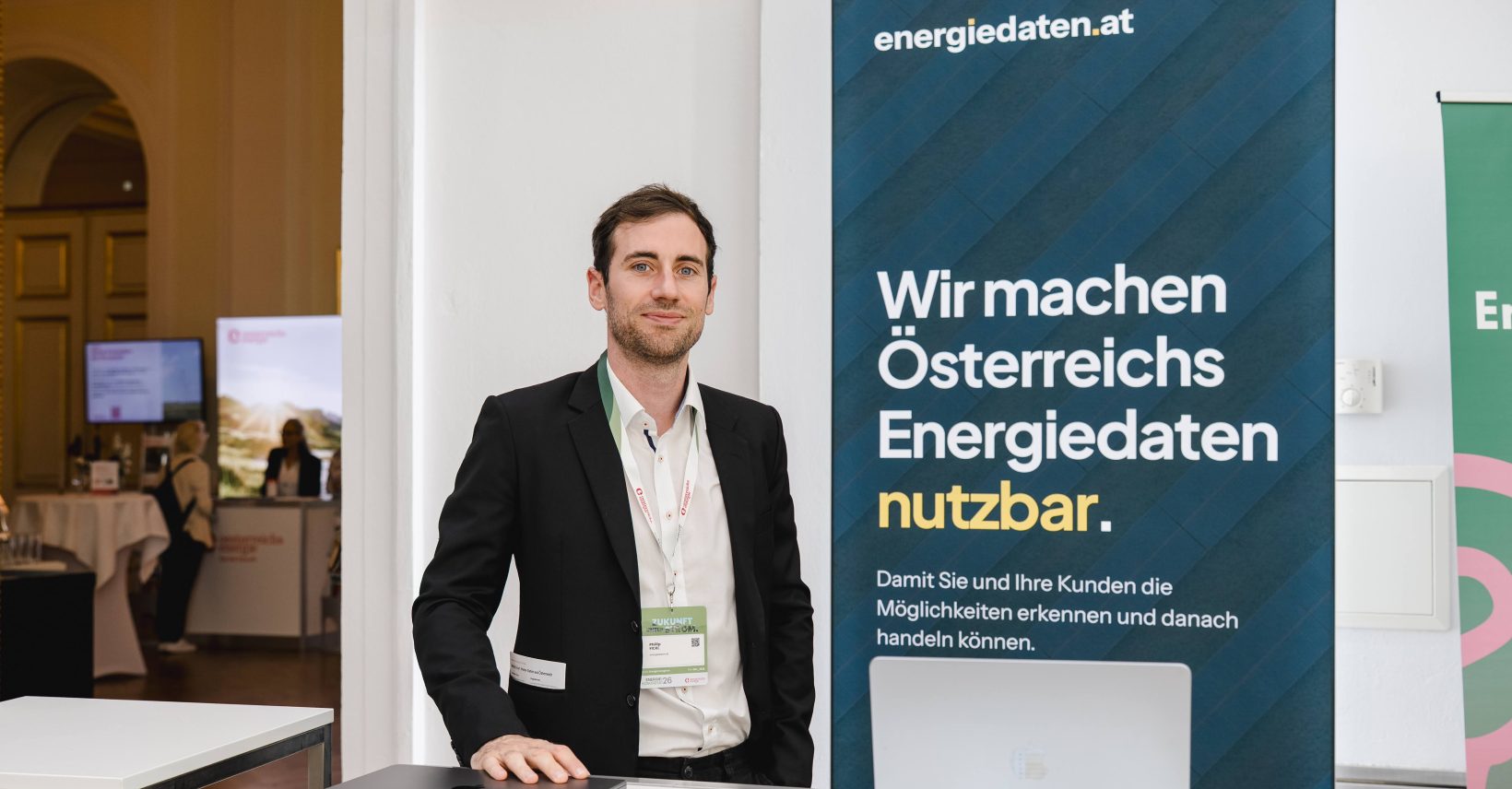
Two days at the Hofburg, a stand in the start-up row, and one sentence we said there more often than any other: the electricity market has been open for 25 years, access to consumption data has not.
A panel of its own took stock of the quarter-century of competition and market opening. Liberalisation brought the free choice of supplier. Much of what now looks like part of the package arrived far later: energy communities only with the EAG package in 2021.[1] So the range of choices has grown, but the figures that would show which of them pays off for one particular business are still hard to get hold of.
The data itself has existed all along; it is produced during normal operation and sits with the grid operator. Anyone who wants to analyse it needs the customer's consent and has to work through the market communication, which has its quirks at every grid operator. That is the part we take off our customers' hands.
A visit to the stand
On the first day, State Secretary Elisabeth Zehetner, Oesterreichs Energie president Michael Baminger and Secretary General Barbara Schmidt stopped by.
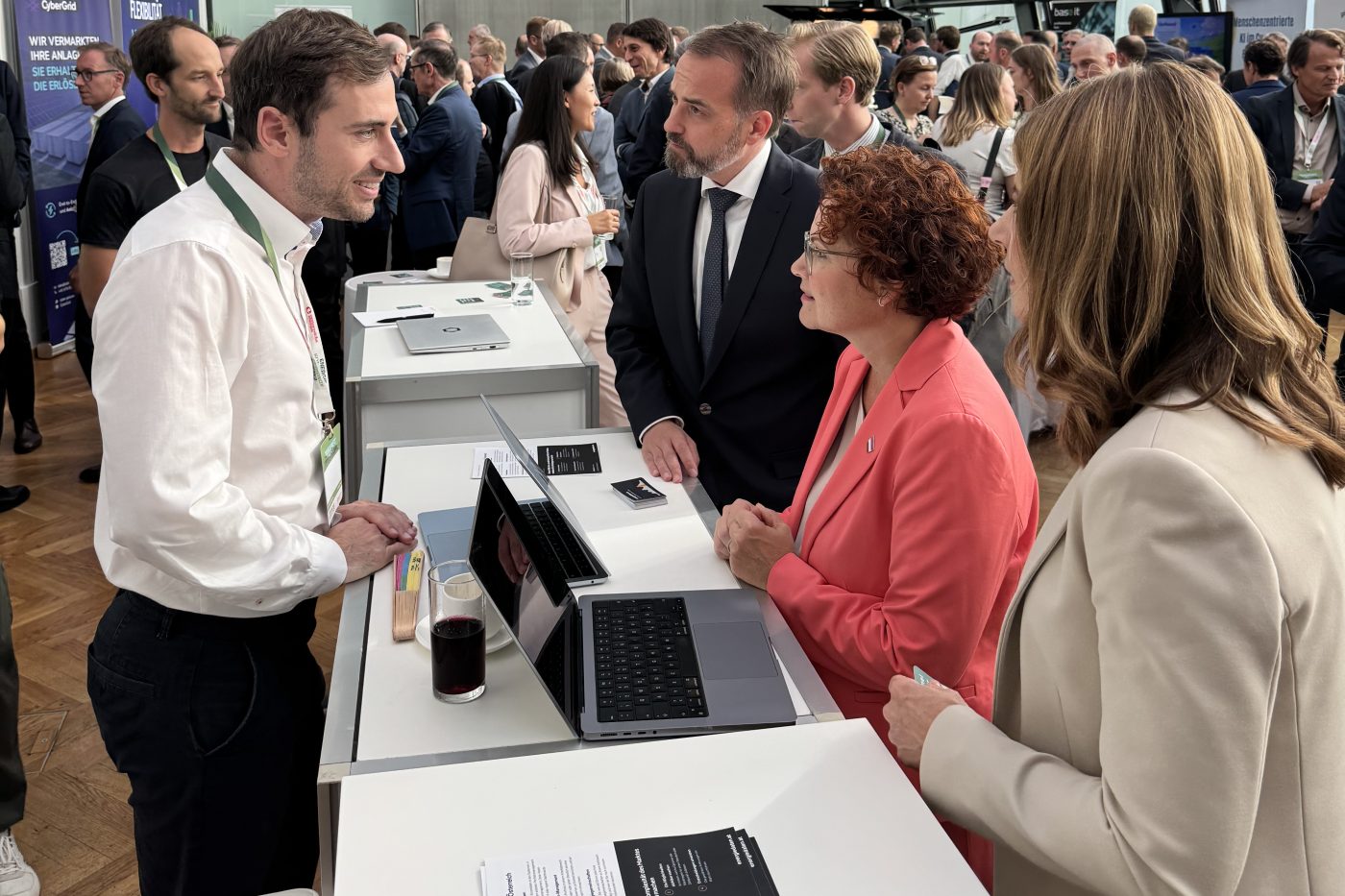
One line from Baminger's address went into our notes: "Customers have to be partners in this transformation, not objects of it." In practice, which of the two someone is often comes down to whether they can reach their own data.
The keynote that stayed with us
After two days of technology, markets and regulation came the talk we have discussed most since. Florence Gaub, research director at the NATO Defense College, spoke about strategic foresight. She gave three reasons why geopolitical developments are so hard to judge: the quality of the available data, its volume, and the difficulty of finding stable patterns in it.
We know those three problems from a much smaller scale. A year of quarter-hour values for one site is 35,040 numbers. Some are measured, some estimated, some missing. The pattern in them is real, but it only emerges once someone knows where the gaps are and aggregates the values correctly.
Gaub described how foresight works: gather weak signals, build scenarios from them, then derive options for action from the scenarios. The last step matters most. For her, foresight is an instrument for deciding better today. A business weighing up a PV system, a battery or a change of tariff follows the same sequence, with its own load profile as the basis.
What comes next
On 1 October the ElWG provisions on citizen energy take effect, and existing energy communities move into the new legal framework. Four days later the first P2P market processes are due to start.[2] We summarised what the ElWG changes for energy communities in the spring.
Thank you to everyone who stopped at our stand and told us where data access snags in their own practice. If you would like to pick up the thread, you can reach us here.
[1] ElWOG 2010 §§ 16a-16e as amended by BGBl. I Nr. 150/2021 (the EAG package): §§ 16b (citizen energy community) and 16e took effect on 28 July 2021 per RIS; § 16a (joint generation plant) already on 27 July 2017.
[2] ElWG, BGBl. I Nr. 91/2025, § 188 para. 3: §§ 66-72 (citizen energy) enter into force on 1 October 2026. EBUtilities, Consultation 99 (citizen energy models phase 1): the corresponding EDA market processes go live on 5 October 2026.